A practical look at what actually matters when choosing underwater camera filters, from fit and light pairing to durability, so your setup performs the way you expect once you are in the water.
Start With Compatibility, Not Assumptions
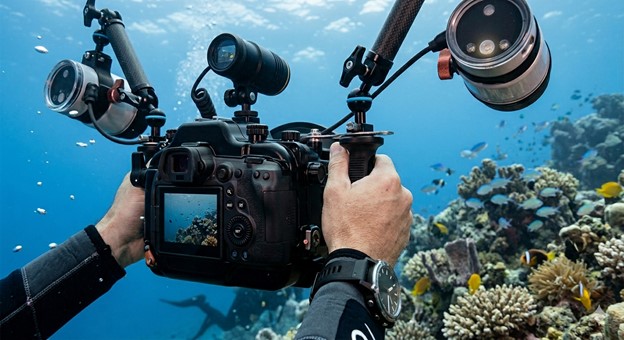
Most problems with filters start before the dive even begins. Someone buys a filter that looks right, screws it on, and assumes the rest will sort itself out underwater. It rarely does. The smallest mismatch between a housing port and a filter can throw off your entire image, whether that shows up as dark corners, strange color shifts, or a general loss of clarity. If your camera for underwater photography is dialed in, but the filter sits even slightly off, the results will feel disappointing in a way that is hard to diagnose unless you have seen it before.
Make Sure the Filter Actually Fits Your Setup
Fit is not just about whether the filter attaches. It is about how it sits in relation to the lens and how evenly it handles incoming light. Some filters sit too far forward, others too close, and both can create subtle distortions that only become obvious when you review your footage later. It is worth double-checking the exact compatibility with your housing and lens combination instead of relying on general sizing claims. Those shortcuts tend to show up in your images more than anywhere else.
Match the Filter to Your Diving Conditions
A filter that works beautifully in one environment can fall apart in another. Clear tropical water, silty coastal dives, and deeper low-light conditions all demand something slightly different. People often choose filters based on photos they admire without realizing those images were taken in very specific conditions. If your diving does not match that environment, the same setup will not behave the same way. It is not a flaw in the gear; it is a mismatch in expectations.
Understand How Your Light Affects the Results
Filters do not create results on their own. They shape the light that is already there, or the light you bring with you. That is where things get more technical than most expect. A weak or poorly matched dive light will limit what the filter can do, no matter how good the filter is. This becomes even more obvious when working with fluorescent light filter covers, where the balance between excitation light and what the lens captures has to be precise. When it works, the effect is striking. When it does not, everything looks dull and confusing.
Do Not Overlook Build Quality
It is tempting to treat filters as simple accessories, but underwater, they take more abuse than most parts of your setup. Salt, pressure, repeated handling, all of it adds up. Lower quality filters tend to scratch easily or lose their coating, and once that happens, your images start to degrade in ways that are difficult to fix later. A solid filter should feel like a permanent part of your kit, not something you are constantly worrying about replacing.
A Quick Checklist Before You Buy
Before you commit, run through a quick check in your head:
- Does it match your exact housing and lens combination
- Will it perform in the water conditions you actually dive in
- Is your lighting strong and appropriate enough to support it
- Does the material feel like it will hold up over time
- Are you solving a real limitation or just adding gear
It is a simple list, but skipping any one of these tends to show up later, usually when you least want it to.
Think Beyond Your Current Setup
Most divers who stick with underwater photography improve quickly, and their expectations change just as fast. What feels like a solid setup today can start to feel limiting within a few months. Choosing a filter that works with your current camera for underwater photography is important, but it helps to think one step ahead. A bit of flexibility in your gear can save you from having to rebuild everything as your skills develop.
A Practical Approach to Choosing the Right Gear
We keep things straightforward at Fire Dive Gear, because there is no single setup that works for everyone. The details matter, and small differences in gear can change the outcome more than people expect. Once you understand how your system fits together, the decisions get easier, and the results start to make more sense.
Conclusion
The right filter does not just improve your images, it makes the entire dive feel more intentional. You are not guessing or hoping things will work out. You know what your setup can do. If you are unsure about what fits your gear or want to avoid the kind of mistakes that only show up after the dive, get in touch with us, and we will help you sort out a setup that actually works in the water.
FAQs
- How do I know if a filter will fit my setup?
Check your camera housing and lens port specifications carefully. Even small mismatches can affect image quality underwater. - Can I use the same filter for all dive conditions?
Not really. Different water clarity and depths require different filters to get consistent results. - Why does my filter not seem to improve my photos?
In most cases, it is a lighting issue. Filters depend heavily on the right type and strength of dive light to work properly. - Are expensive filters actually worth it?
Higher quality filters tend to last longer and maintain clarity. Cheaper ones often degrade quickly and affect image results. - Should I upgrade my filter when I upgrade my camera?
Yes, especially if the new setup has a different lens or housing specs. A filter that worked before may not perform the same way.
Leave A Comment