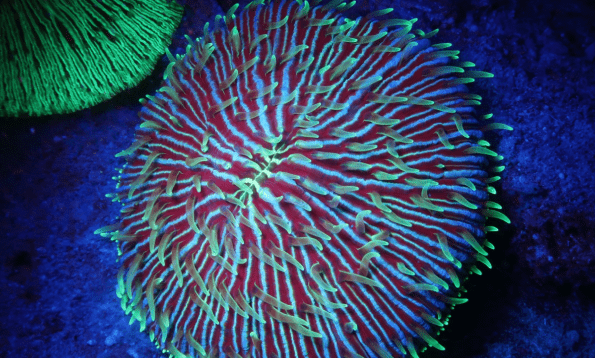
Here’s a little deeper dive into the history, and uses of fluorescence in science. Fluorescence is a phenomenon that occurs when a substance absorbs light at a particular wavelength and re-emits light at a longer wavelength. This process involves the absorption of photons by a fluorophore, followed by the emission of photons through relaxation mechanisms. […]
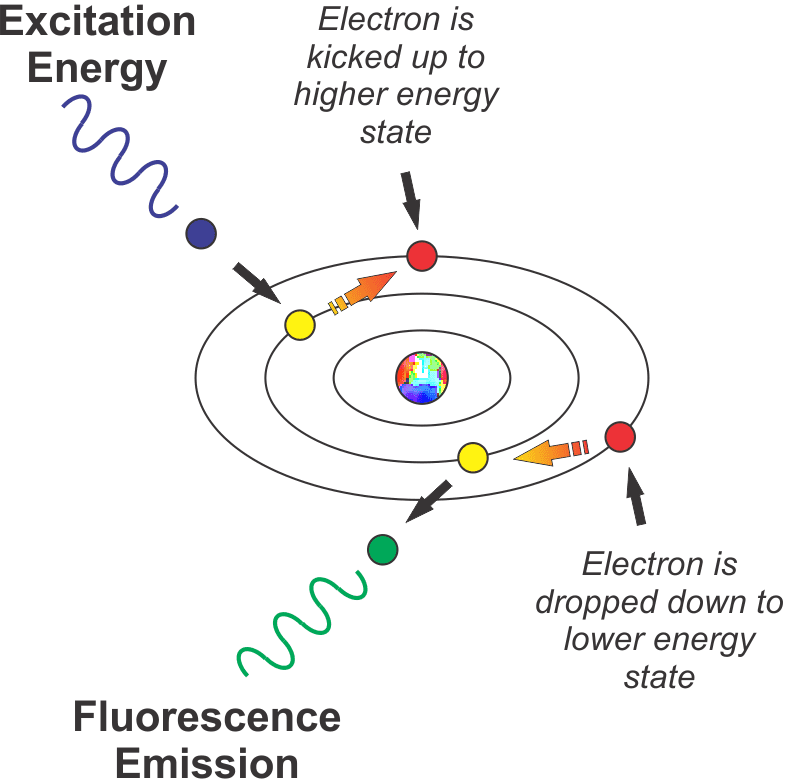
Read MoreThe schematic representation of the fluorescence effect below demonstrates the mechanism when blue light strikes the protein GFP, which absorbs the blue light’s energy. The absorption of the light’s energy causes the electrons of the protein’s constituent atoms to make a quantum jump from one valence electron shell to a higher shell. This change of […]
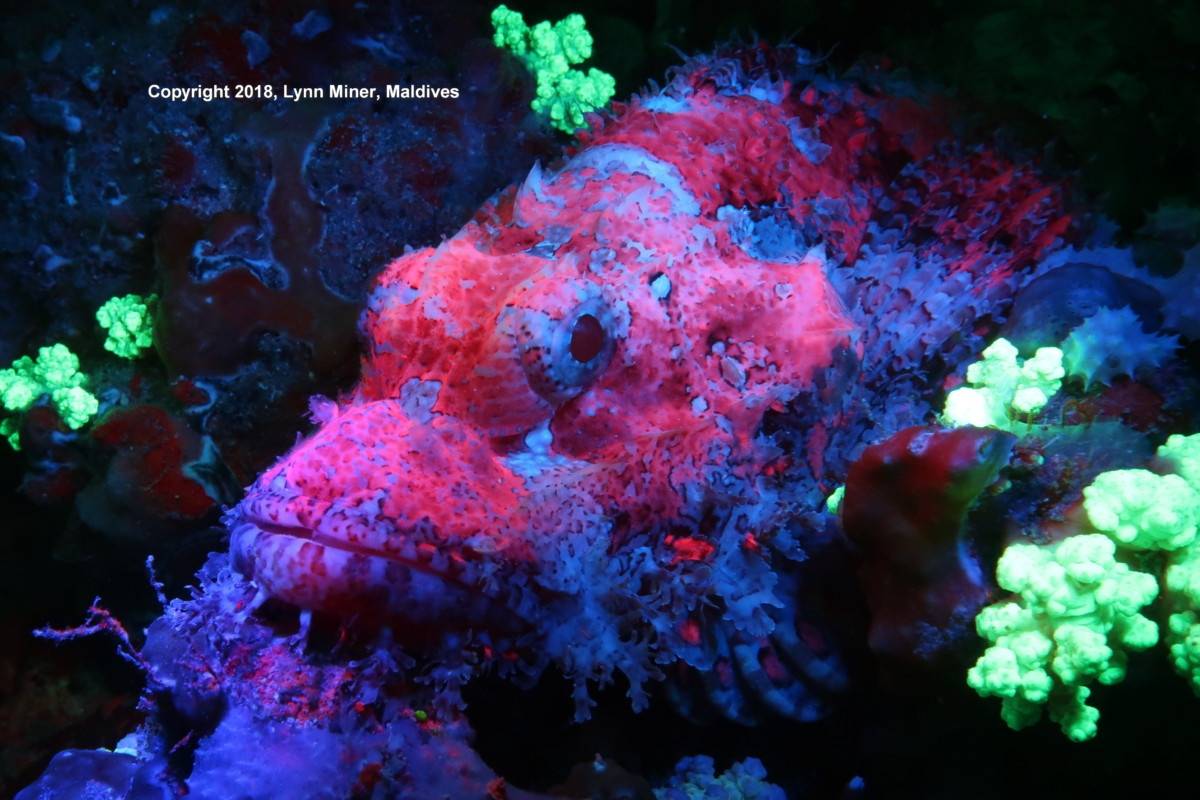
Read MoreDivers, who are inquisitive by nature, are always looking for new ways to experience the wonders of the underwater world. One increasingly popular diving technique called fluorescence (fluo) diving gives divers the ability to observe marine creatures in brilliant, glowing colors invisible to the naked eye. Fluo diving relies on the property of some marine […]
Read More