
The first mistake usually happens before the diver even gets in the water.
Someone sees a glowing reef photo online, buys a couple of fluorescence filters, clips them onto a camera setup, and assumes the ocean is about to light up like a science fiction movie. Then the dive happens, and the images come back dull, muddy, or strangely flat. The coral barely glows. The colors look weak. Half the shots are unusable.
At Fire Dive Gear, we’ve seen this cycle for years. Fluoro diving is incredible when the setup is right, but it’s less forgiving than standard underwater photography. Small mistakes have a habit of showing up immediately once you descend.
Mixing Filters That Were Never Designed to Work Together
This one causes more frustration than almost anything else.
Fluorescence filters are not generic accessories you randomly piece together. The excitation filter on the light and the barrier filter on the camera need to complement each other properly. If the wavelengths are mismatched, fluorescence gets overwhelmed or blocked entirely.
A diver may still see blue light underwater and assume everything is functioning correctly. Meanwhile, the actual fluorescence effect is getting buried under reflected light contamination.
That’s why proper system matching matters. Especially for photographers trying to capture subtle fluorescence patterns instead of just visible blue illumination.
Using Weak Underwater Photography Lights
A regular dive torch and dedicated fluorescence lighting are two very different things.
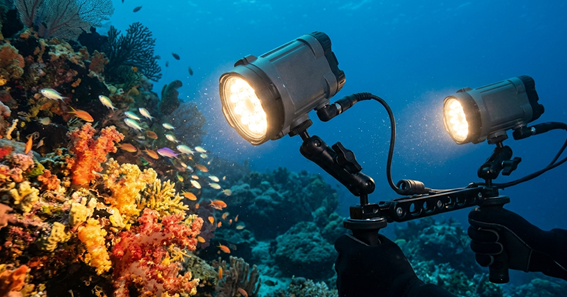
Some divers attempt fluoro dives with low-output recreational lights and wonder why subjects barely react. Fluorescence depends heavily on excitation intensity. If the light lacks proper power or wavelength accuracy, the reef simply won’t respond the way it should.
Good underwater photography lights create enough concentrated excitation to reveal details most divers never notice during daytime dives. Tiny fluorescent traces in coral tissue. Unexpected colors in anemones. Patterns hidden in plain sight for years.
Weak lighting flattens all of that.
Shooting Too Far from the Subject
New fluoro photographers almost always try wide-angle shots too soon.
The problem is physics. Water absorbs and scatters light rapidly, even in clear conditions. Fluorescence works best when excitation remains concentrated on the subject. Once distance increases, the effect weakens fast.
Macro work usually produces stronger results because the camera stays close enough for the fluorescence filters and lighting system to work efficiently together. Small reef sections, nudibranchs, tube anemones, those subjects often produce the dramatic glowing images people associate with fluoro diving.
Wide scenes take considerably more control and experience than most people expect.
Ignoring Ambient Light
Fluorescence is subtle by nature. Ambient light competes against it constantly.
Even shallow dusk dives can wash out fluorescence if surrounding light levels remain too bright. Many experienced fluoro divers prefer full night dives for exactly that reason. Darkness increases contrast. Colors separate more cleanly. The fluorescent response becomes easier to isolate both visually and through the camera system.
Sometimes the difference between an average image and a spectacular one is simply waiting another thirty minutes for the light to fade.
Expecting Perfect Results Immediately
Fluoro diving has a learning curve. There’s really no way around it.
Experienced photographers still spend dives adjusting beam angles, repositioning filters, tweaking strobe placement, or experimenting with exposure settings underwater. Some nights everything clicks immediately. Other nights require patience.
At Fire Dive Gear, we build equipment for divers, researchers, photographers, and film crews who need reliable fluorescence systems underwater. From precision fluorescence filters to professional-grade underwater photography lights, the right setup makes exploration far more rewarding once the reef starts glowing back at you.
FAQs
What are fluorescence filters used for?
Fluorescence filters isolate glowing fluorescent colors produced by marine organisms under excitation lighting during fluoro dives.
Do I need special underwater photography lights for fluoro diving?
Yes. Fluorescence diving requires lights with the correct excitation wavelength and sufficient power output.
Why do my fluoro photos look dull underwater?
Weak lighting, mismatched filters, excessive distance, or ambient light interference commonly reduce fluorescence visibility.
Is fluoro diving difficult for beginners?
Not necessarily. With the right equipment and practice, beginners can learn fluorescence diving and underwater photography successfully.
Leave A Comment